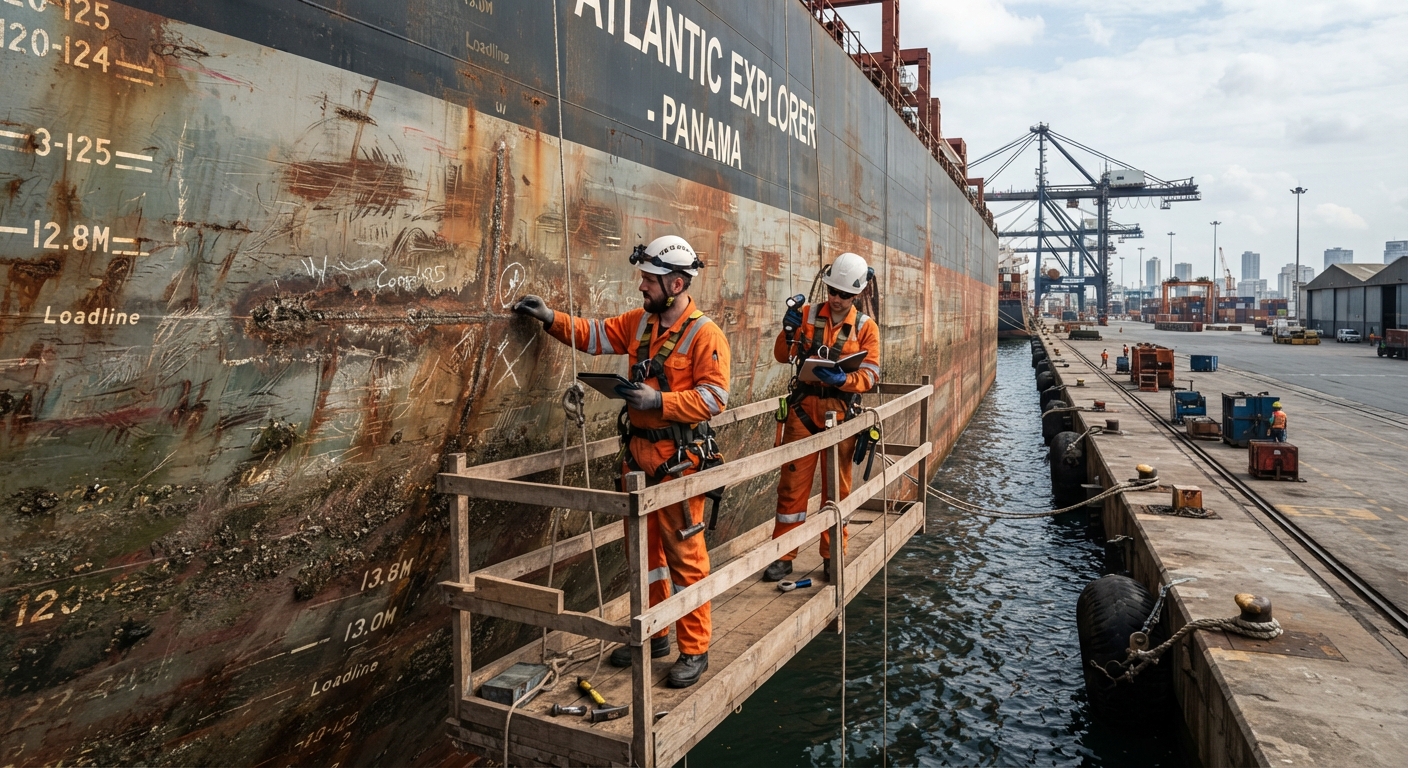
Ship Hull & Structural Inspection Services in Bangladesh | JK.S MARINE SERVICES
JK.S MARINE SERVICES provides professional Ship Hull & Structural Inspection Services in Bangladesh for shipowners, ship management companies, charterers, ship operators, shipbrokers, P&I correspondents, marine insurers, vessel buyers, and other maritime stakeholders. Our services support the inspection and assessment of visible ship hull conditions, structural steelwork, decks, bulkheads, cargo holds, ballast tanks where safely accessible, hatch covers, and other relevant vessel structures.
Our marine inspection team helps clients identify visible corrosion, coating deterioration, deformation, cracks, dents, steel wastage concerns, and other apparent structural defects within the agreed inspection scope. We provide structured inspection observations, photographic documentation where permitted, and reports to support maintenance planning, repair decisions, pre-purchase evaluations, and vessel condition assessments.
We serve clients requiring marine hull and structural inspection support at Chittagong (Chattogram) Port & Anchorage, Mongla Port & Anchorage, Payra Port & Anchorage, and Kutubdia Anchorage and designated Deep-Sea Jetty locations, subject to vessel access, permissions, safety requirements, and service availability.
With experienced maritime team members bringing approximately 15–20+ years of relevant industry experience, JK.S MARINE SERVICES focuses on practical inspection support, responsive communication, transparent reporting, and cost-effective service arrangements.
Contact JK.S MARINE SERVICES for ship hull inspection, marine structural inspection, vessel condition assessment, and steel structure inspection services in Bangladesh.
Professional Marine Hull and Structural Inspection in Bangladesh
A vessel’s hull and structural components are exposed to seawater, cargo operations, weather, mechanical stress, corrosion, and normal operational wear. Without appropriate inspection and maintenance, deterioration may remain undetected until it requires expensive repairs, affects vessel availability, or creates a safety concern.
JK.S MARINE SERVICES supports clients by arranging suitable inspection personnel to examine accessible vessel structures, document visible conditions, identify apparent defects, and report areas that may require further technical investigation.
Our inspection scope is agreed in advance according to the vessel type, location, access conditions, client requirements, and purpose of the inspection. Where necessary, we can coordinate additional specialist services, including ultrasonic thickness measurement, non-destructive testing, coating assessment, underwater inspection, and steel repair, subject to the availability and qualifications of the relevant specialists.
Our objective is to help clients make informed decisions about vessel condition, maintenance priorities, repair planning, and further inspection requirements.
Ship Hull & Structural Inspection Services We Provide
Ship Hull Condition Inspection
Our ship hull condition inspection service focuses on the visible condition of accessible hull structures and associated areas. Depending on the vessel’s location and inspection arrangements, our personnel examine accessible external hull surfaces, shell plating, visible corrosion, dents, deformation, coating deterioration, and apparent damage. Observations are documented with descriptions and photographs where permitted. Underwater hull areas cannot be fully assessed through an ordinary above-water inspection and may require a separately arranged underwater survey using suitable equipment and qualified personnel.
Ship Structural Steel Inspection
We provide inspection support for accessible structural steelwork on ships, including decks, bulkheads, stiffeners, brackets, frames, girders, and other relevant steel components. The inspection aims to identify visible cracks, distortion, corrosion, deformation, damaged weld areas, and apparent steel deterioration. Findings are recorded for the client’s review, with recommendations for further examination where appropriate. Engineering assessments, structural strength calculations, and formal class acceptance are outside the scope of an ordinary visual inspection unless separately arranged with appropriately qualified professionals.
Ship Hull Corrosion Inspection
Hull corrosion inspection helps clients identify visible corrosion, coating breakdown, rust formation, and areas where steel deterioration may require further investigation. Our personnel examine accessible surfaces and record the location, extent, and apparent severity of observed corrosion within the agreed scope. Where steel wastage needs to be quantified, ultrasonic thickness measurement or another suitable testing method may be required. Visual observations alone cannot establish the remaining steel thickness or confirm the structural integrity of a component.
Ship Steel Plate Thickness Measurement Coordination
JK.S MARINE SERVICES can coordinate steel plate thickness measurement services for vessel hulls, decks, cargo holds, ballast tanks, and other agreed structural areas. Thickness measurements can help determine the extent of steel wastage and provide information for maintenance and repair planning. Such measurements must be performed using suitable calibrated equipment by competent personnel, with access and surface preparation arranged as necessary. Where class-approved thickness gauging is required, the work must be undertaken in accordance with applicable classification society requirements and the relevant authorization.
Ship Hull Damage Inspection
We support the inspection and documentation of visible hull damage, including dents, buckling, deformation, impact marks, damaged coatings, and apparent structural damage following an incident or operational event. Our personnel record accessible evidence, identify the affected locations, and report observations to the appointed client representative. Where the damage may affect seaworthiness, watertight integrity, or structural strength, the vessel’s responsible officers and appropriately qualified technical specialists must determine the necessary safety measures and further assessments.
Ship Deck Structural Inspection
Our ship deck inspection service covers accessible deck plating, deck structures, visible weld areas, stiffeners, brackets, supporting members, and associated fittings. We look for visible corrosion, cracking, deformation, coating deterioration, and other apparent defects that may require maintenance or further examination. Findings are documented to help shipowners and technical managers plan corrective action. The inspection does not replace detailed structural engineering analysis, class surveys, or specialist testing where these are required by the vessel’s condition or applicable regulations.
Cargo Hold Structural Inspection
We inspect accessible cargo hold structures for visible corrosion, damaged coatings, dents, deformation, damaged brackets, apparent cracks, and other conditions relevant to cargo operations and vessel maintenance. Where access permits, observations may include hold frames, bulkheads, tank tops, and visible structural members. Findings can help clients assess maintenance needs before loading or after discharge. Cargo hold cleanliness, suitability for a particular cargo, and formal cargo-worthiness assessments can be included only when the scope is clearly defined and the assigned personnel are competent to perform them.
Ballast Tank Structural Condition Inspection
Ballast tank inspection can help identify visible corrosion, coating breakdown, structural deformation, and other apparent defects within accessible tank areas. Entry into enclosed or confined spaces requires appropriate authorization, risk assessment, atmospheric testing, ventilation, rescue arrangements, and compliance with the vessel’s safety procedures. We only arrange tank inspections when the required safety conditions and access arrangements are confirmed. Where detailed steel condition assessment or class-related inspection is needed, suitable specialist personnel and additional testing may be required.
Ship Bulkhead Inspection
Our bulkhead inspection service focuses on the visible condition of accessible transverse and longitudinal bulkheads, including apparent corrosion, cracks, dents, deformation, damaged coatings, and defects around structural connections. We record the affected areas and provide observations for the client’s technical review. Watertight and oil-tight integrity cannot be confirmed through visual observation alone where specialist testing is necessary. Any required pressure testing, leak testing, or structural assessment must be arranged according to the vessel’s technical requirements and applicable procedures.
Ship Hatch Cover Structural Inspection
We provide inspection support for accessible hatch covers, panels, supporting structures, securing arrangements, and visible associated components. The inspection may identify corrosion, deformation, damaged fittings, deteriorated seals, and apparent defects that require maintenance. Hatch-cover weather-tightness and watertightness cannot be conclusively established by visual inspection alone. Where required, suitable hose testing, ultrasonic testing, or another accepted testing method can be arranged as a separate service, subject to the appropriate equipment, personnel, and testing procedure.
Ship Welding and Weld Defect Visual Inspection
Our visual welding inspection service examines accessible weld areas for apparent surface defects, including visible cracking, undercutting, incomplete-looking weld profiles, surface porosity, and other irregularities that may warrant further investigation. Findings are documented for the client and can be used to identify areas requiring closer examination. Visual inspection cannot detect every internal weld defect or establish compliance with all welding standards. Where necessary, additional non-destructive testing can be arranged through suitably qualified personnel using appropriate methods.
Ship Frame, Stiffener and Girder Inspection
Frames, stiffeners, and girders contribute to a vessel’s structural strength and resistance to operational loads. Our inspection personnel examine accessible components for visible corrosion, deformation, cracks, damaged connections, and apparent structural deterioration. Findings are recorded with location details and supporting photographs where permitted. Where structural adequacy is in question, an appropriately qualified naval architect, structural engineer, classification surveyor, or other authorized specialist may be required to conduct further analysis.
Ship Bilge Area Structural Inspection
We provide inspection support for accessible bilge areas and associated structural components where safe access is available. The inspection may identify visible corrosion, water accumulation, coating deterioration, damaged fittings, and apparent structural defects. Observations can help clients plan cleaning, maintenance, and further examination. Access to bilge spaces may involve confined-space hazards, contaminated residues, slippery surfaces, or restricted ventilation. The inspection proceeds only when appropriate access controls and safety precautions are confirmed.
Engine Room Structural Condition Inspection
Our engine room structural inspection service covers accessible deck plates, foundations, brackets, supports, bulkheads, and other relevant structural components. We look for visible corrosion, deformation, cracking, damaged welds, and signs of deterioration that may require technical review. Machinery condition, vibration analysis, alignment checks, and detailed foundation engineering are separate technical services unless specifically included. Our report can help the vessel’s technical team identify structural observations that require maintenance or specialist investigation.
Ship Forecastle and Aft Deck Inspection
We inspect accessible forecastle and aft deck structural areas for visible corrosion, deformation, cracking, damaged steelwork, and apparent defects around fittings or supporting structures. Depending on the vessel and agreed scope, observations may cover exposed deck plating, structural connections, and areas affected by weather or operational activity. Findings are documented to support maintenance planning and further technical evaluation where needed. The inspection does not replace specialist assessment of anchoring equipment, mooring systems, or other machinery and fittings.
Ship Bow and Stern Structural Inspection
Our bow and stern inspection service focuses on accessible structural areas where impact damage, corrosion, deformation, or coating deterioration may be observed. Particular attention can be given to visible shell plating, accessible deck structures, and areas identified by the client following an incident or maintenance concern. Underwater bow and stern structures require a separate underwater inspection when a complete assessment is needed. Any suspected damage affecting watertight integrity or seaworthiness must be referred promptly to the responsible vessel officers and relevant technical specialists.
Ship Corrosion Mapping and Defect Documentation
Where the inspection scope and available records permit, we can prepare a structured record of observed corrosion and apparent structural defects. The record may include compartment or location references, descriptions, photographs, defect categories, and recommendations for further examination. Corrosion mapping can help the client prioritize maintenance and organize subsequent thickness measurements or repairs. Quantitative corrosion assessment requires appropriate measurement data; a visual defect register should not be interpreted as a certified steel-thickness or remaining-life assessment.
Pre-Purchase Ship Hull and Structural Inspection
We assist prospective vessel buyers, shipbrokers, investors, and operators with pre-purchase hull and structural inspection support. The scope may include accessible hull areas, decks, cargo holds, bulkheads, visible corrosion, apparent structural damage, and other agreed areas of concern. Findings can help the buyer identify items requiring further investigation before making a commercial decision. A visual inspection is not a substitute for a complete pre-purchase survey, machinery survey, underwater examination, thickness gauging, or review of classification and statutory records where these are required.
Ship Condition Inspection for Owners and Managers
Our vessel condition inspection service helps shipowners and technical managers obtain a documented overview of the visible condition of specified structural areas. We record apparent defects, maintenance concerns, coating deterioration, and areas requiring specialist follow-up. The assignment can be tailored to routine technical reviews, maintenance planning, repair preparation, or a specific concern raised by the client. Inspection coverage depends on vessel access, operational conditions, available documentation, and the qualifications of the personnel assigned.
Ship Hull Inspection Before and After Dry Dock
We support hull condition inspections before or after dry-docking to help clients document visible structural conditions and identify repair items requiring attention. The inspection may cover accessible shell plating, visible weld areas, corrosion, dents, coating condition, and agreed structural locations. Photographs and defect descriptions can help the client compare conditions and organize repair work. Dry-dock inspections requiring classification approval, detailed measurements, or acceptance of completed repairs must be conducted by appropriately qualified and authorized personnel.
Ship Structural Inspection After Collision or Grounding
Following a collision, grounding, or suspected impact event, we can assist with documenting accessible visible structural damage within the agreed scope. Observations may include deformation, dents, cracking, damaged coatings, and other apparent defects. The vessel’s master and responsible technical personnel must assess immediate safety, seaworthiness, and the need for emergency action. Underwater damage, hidden structural defects, and internal damage may require specialist examination, thickness measurements, non-destructive testing, or an authorized underwater survey.
Marine Structural Inspection for Repair Planning
Our inspection reports can help clients organize structural repair work by identifying observed defects, their locations, and the areas requiring further technical assessment. Where appropriate, we can coordinate with the client’s technical team or repair contractor to arrange additional measurements, specialist testing, or repair quotations. Final repair specifications, structural calculations, welding procedures, and approval requirements must be determined by the appropriately qualified technical professionals and any relevant classification society or authority.
Ship Coating and Paint Condition Inspection
We inspect accessible painted and coated vessel surfaces for visible peeling, blistering, rust staining, coating breakdown, and other apparent deterioration. Findings can help clients plan surface preparation, coating maintenance, and further examination of underlying steel. A visual coating inspection does not establish coating thickness, adhesion strength, or the full extent of concealed corrosion. Where required, dry-film thickness measurements, adhesion testing, or specialist coating assessment can be arranged as separate services using suitable equipment and qualified personnel.
Underwater Hull Inspection Coordination
JK.S MARINE SERVICES can coordinate underwater hull inspection requirements for vessels where an underwater assessment is necessary. Depending on the location and authorization, this may involve arranging suitable qualified divers, remotely operated vehicle services, or other approved inspection resources. Underwater inspections may examine accessible hull plating, propeller areas, rudder surfaces, sea chests, and other specified components. The method, scope, safety arrangements, and acceptance criteria must be agreed in advance, and any classification-related requirements must be confirmed with the relevant authority or classification society.
Non-Destructive Testing Coordination for Ship Structures
Where visible observations indicate that further testing may be necessary, we can coordinate suitable non-destructive testing services through appropriately qualified and competent specialists. Depending on the component and inspection objective, methods may include ultrasonic testing, magnetic particle testing, dye penetrant testing, or other applicable techniques. The correct method depends on the material, defect type, accessibility, and relevant acceptance criteria. Testing reports and interpretations must be provided by suitably qualified personnel, and any required class approval must be confirmed separately.
How We Conduct Ship Hull & Structural Inspection
Step 1: Understand the Vessel and Inspection Requirements
We collect the vessel name, IMO number, type, location, inspection purpose, reported defects, access limitations, and any relevant technical documents available from the client. This information helps us define a practical inspection scope and identify whether additional specialist personnel or equipment may be necessary.
Step 2: Define the Inspection Scope and Quotation
We discuss the structural areas to be inspected, the level of reporting required, the attendance duration, and any additional measurement or testing requirements. Our quotation is based on the agreed scope, location, manpower, mobilization, equipment, and reporting needs. Any exclusions or limitations are clarified before work begins.
Step 3: Arrange Access and Safety Requirements
We coordinate access with the vessel’s authorized representatives and relevant local contacts. Before inspection, the necessary permits, access arrangements, personal protective equipment, lighting, and other applicable safety controls must be confirmed. Confined-space entry, underwater inspection, and specialist testing require additional procedures and competent personnel.
Step 4: Inspect Accessible Structural Areas
The appointed personnel examine the agreed areas and record visible conditions, apparent defects, and locations requiring attention. Where appropriate, photographs and location references are included to help the client understand the findings. Areas that cannot be safely accessed are identified as inspection limitations rather than reported as inspected.
Step 5: Record Findings and Identify Further Requirements
Observed defects are documented with descriptions and supporting evidence where available. If a finding requires thickness measurement, non-destructive testing, engineering review, underwater inspection, or class attendance, we communicate the need for further investigation to the client.
Step 6: Prepare and Submit the Inspection Report
We prepare a report according to the agreed scope. The report may include vessel details, inspection locations, observed defects, photographs, access limitations, and recommendations for further examination. Certification or formal acceptance is included only where the appropriate authorization and service arrangement permit it.
Step 7: Coordinate Follow-Up Services if Required
If the client needs additional testing, repair planning, or technical support, we can discuss the next steps and coordinate suitable service providers. Additional work is quoted separately where it falls outside the original inspection scope.
How Ship Hull & Structural Inspection Helps Prevent Costly Problems
Undetected structural deterioration can contribute to unplanned repairs, operational interruptions, cargo-operation delays, and increased maintenance expenses. Appropriate inspection and timely follow-up can help clients identify concerns before they develop into more serious problems.
JK.S MARINE SERVICES helps clients by:
- Identifying visible structural defects at an early stage.
- Recording corrosion and coating deterioration in accessible areas.
- Documenting apparent dents, deformation, and cracking.
- Highlighting locations that may require steel thickness measurement.
- Supporting maintenance and repair planning.
- Providing photographic records where permitted.
- Communicating inspection limitations clearly.
- Helping clients coordinate additional technical testing when needed.
- Supporting pre-purchase evaluations and vessel condition reviews.
- Providing structured information to assist technical decision-making.
An inspection cannot guarantee that all defects will be found or that future damage will not occur. Hidden defects, inaccessible structures, and defects requiring specialist testing may remain undetected without additional examination. Timely follow-up by competent technical personnel remains essential.
Why Choose JK.S MARINE SERVICES?
Experienced Maritime Team
Our team includes maritime professionals with approximately 15–20+ years of relevant experience among experienced members. Personnel are selected according to the vessel, inspection scope, technical requirements, and availability. Specific inspection activities are assigned only to personnel with suitable competence and qualifications.
Cost-Effective Marine Inspection
We understand the importance of controlling vessel maintenance and inspection costs. Our quotations are based on the agreed scope, location, manpower, equipment, and reporting requirements. We aim to provide practical inspection support at competitive rates while maintaining clear communication about the services included and any additional costs.
Local Knowledge of Bangladesh Ports
Our operational focus includes Chittagong (Chattogram), Mongla, Payra, and designated Kutubdia Anchorage and Deep-Sea Jetty locations. We coordinate attendance according to vessel position, local access conditions, operational schedules, and applicable permissions.
Clear Inspection Reports
We aim to provide structured findings with clear descriptions, location references, and photographs where permitted. Our reports distinguish visible observations from conclusions that require measurements, engineering calculations, or specialist testing.
Flexible Inspection Scope
Clients may request a focused inspection of a particular defect or a broader review of agreed structural areas. We discuss the requirements before attendance and identify when additional specialists, equipment, or authorizations are needed.
Responsive Communication
We coordinate with the designated client contact before and during the assignment and communicate significant findings as promptly as practicable. Timely reporting helps clients decide whether further investigation or maintenance action is required.
Support for Local and International Clients
We work with Bangladesh-based and overseas maritime stakeholders requiring local vessel inspection support. Our service approach is designed to help clients obtain practical observations and organized reporting without unnecessary complexity.
Marine Inspection Manpower and Professional Designations
The appropriate personnel depend on the vessel type, inspection purpose, technical complexity, and applicable qualification requirements. Depending on availability and scope, the following professionals may be involved.
Marine Surveyor
A Marine Surveyor examines vessel condition within the scope of their competence and appointment. Duties may include visual inspection, condition documentation, identification of apparent defects, and preparation of survey observations. Specialized certification, statutory inspection, and class-related work require the relevant qualifications and authorization.
Hull and Structural Inspector
A Hull and Structural Inspector focuses on accessible hull plating, decks, bulkheads, stiffeners, frames, girders, and other agreed structural components. The inspector records visible corrosion, deformation, cracks, and other apparent defects. Additional measurements or engineering assessments may be required before the structural significance of a finding can be determined.
Chief Engineer / Marine Technical Superintendent
Where appropriate and available, an experienced Chief Engineer or Marine Technical Superintendent may contribute technical knowledge relevant to vessel maintenance and structural observations. Their duties depend on the assignment and qualifications. Structural engineering approval, class acceptance, and specialist certification must remain with the professionals authorized to provide them.
Naval Architect / Structural Engineer
A Naval Architect or Structural Engineer may be required where structural strength calculations, engineering evaluation, damage assessment, repair design, or other specialist analysis is necessary. These activities fall outside an ordinary visual inspection and must be assigned to appropriately qualified professionals.
Ultrasonic Thickness Measurement Technician
A competent thickness measurement technician performs ultrasonic steel thickness measurements using suitable equipment and procedures. The service may support corrosion assessment, steel renewal planning, and technical maintenance decisions. Class-related thickness gauging must meet the relevant classification society requirements and authorization conditions.
Non-Destructive Testing Technician
An appropriately qualified Non-Destructive Testing (NDT) Technician carries out specialist testing to detect certain surface or subsurface defects, depending on the method used. Testing method, qualification requirements, reporting, and acceptance criteria are established according to the component, inspection objective, and applicable standards.
Underwater Inspection Specialist
Where underwater hull assessment is required, suitable qualified diving personnel or an approved underwater inspection provider may be engaged. The scope, equipment, operational approvals, and safety arrangements depend on the vessel, location, and inspection method.
Additional Technical Personnel
Depending on the project, additional specialists may be required for coating inspection, welding inspection, repair supervision, confined-space work, or other specific activities. Personnel, qualifications, and service availability are confirmed before the assignment.
Ship Hull & Structural Inspection Service Areas in Bangladesh
JK.S MARINE SERVICES provides inspection coordination and suitable marine inspection support in the following locations, subject to operational access and confirmed service availability.
Chittagong (Chattogram) Port & Anchorage
We support ship hull and structural inspection assignments at Chittagong, also known as Chattogram, Port and Anchorage. Services may include visible hull condition inspection, structural steel inspection, cargo hold inspection, deck inspection, corrosion observations, hatch-cover inspection, and coordination of specialist testing. Attendance is arranged according to the vessel’s location, inspection scope, safety requirements, and access permissions.
Local SEO Keywords: Ship Hull Inspection Chittagong, Ship Structural Inspection Chattogram, Marine Surveyor Chittagong Port, Vessel Condition Inspection Bangladesh, Ship Steel Thickness Measurement Chittagong.
Mongla Port & Anchorage
Our team can arrange suitable ship hull and structural inspection support at Mongla Port and Anchorage. Depending on the vessel and assignment, the service may cover accessible structural areas, corrosion observations, visible steel damage, cargo hold structures, and maintenance-related inspection requirements. Specialist testing, underwater work, and confined-space inspections require separate confirmation of qualifications, equipment, access, and safety arrangements.
Local SEO Keywords: Ship Hull Inspection Mongla Port, Ship Structural Survey Mongla, Marine Surveyor Mongla Bangladesh, Vessel Condition Inspection Mongla, Ship Corrosion Inspection Mongla.
Payra Port & Anchorage
We support suitable hull and structural inspection assignments at Payra Port and Anchorage, subject to personnel availability, access, and the confirmed inspection scope. Our services can include visual examination of accessible structural components, documentation of apparent defects, and coordination of additional testing when required. Clients are encouraged to provide vessel particulars and inspection objectives in advance to help us arrange appropriate manpower and equipment.
Local SEO Keywords: Ship Hull Inspection Payra Port, Ship Structural Inspection Payra, Marine Surveyor Payra Port Bangladesh, Vessel Hull Condition Survey Payra, Ship Steel Inspection Payra.
Kutubdia Anchorage & Deep-Sea Jetty Operations
We can consider ship hull and structural inspection requirements at Kutubdia Anchorage and designated Deep-Sea Jetty locations. Attendance depends on vessel position, safe boarding arrangements, local permissions, weather, launch or transport requirements, and the availability of suitable personnel. Where the requested inspection involves underwater structures, confined spaces, thickness measurements, or specialist testing, additional planning and qualified resources may be required.
Local SEO Keywords: Ship Hull Inspection Kutubdia, Ship Structural Inspection Kutubdia Anchorage, Marine Surveyor Kutubdia Bangladesh, Vessel Condition Survey Kutubdia, Offshore Ship Inspection Bangladesh.
Types of Vessels We Can Support
Depending on the inspection scope, vessel condition, access, and available personnel, we can consider inspection assignments involving:
- Bulk carriers
- General cargo vessels
- Container vessels
- Multi-purpose vessels
- Oil and chemical tankers
- Product tankers
- Offshore support vessels
- Tugboats and workboats
- Barges and other commercial vessels
- Vessels undergoing maintenance or repair
- Vessels being considered for purchase or sale
The suitability of each assignment is assessed individually, particularly where specialized vessel systems, hazardous areas, underwater work, or class-related requirements are involved.
Who Needs Ship Hull & Structural Inspection?
Our services may benefit:
- Shipowners and ship-owning companies
- Ship management companies
- Charterers and vessel operators
- Shipbrokers and sale-and-purchase intermediaries
- Prospective vessel buyers
- P&I correspondents and marine claims representatives
- Marine insurers and their appointed representatives
- Technical superintendents and fleet managers
- Ship repair yards and marine contractors
- Investors evaluating vessel condition
- International shipping companies requiring local inspection support in Bangladesh
What Our Ship Hull Inspection Report May Include
Depending on the agreed scope and inspection findings, the report may contain:
- Vessel name, IMO number, and available particulars.
- Inspection date, location, and purpose.
- Areas and structural components inspected.
- Description of visible corrosion and coating deterioration.
- Observations of apparent cracks, dents, and deformation.
- Photographs and location references where permitted.
- Areas requiring further inspection or measurement.
- Access limitations and uninspected areas.
- Recommended follow-up testing where appropriate.
- Summary of key observations for the client.
Reports are prepared according to the agreed scope and available evidence. A visual condition report should not be treated as a class certificate, statutory certificate, engineering approval, or guarantee of the vessel’s overall structural integrity.
Competitive Ship Hull & Structural Inspection Rates in Bangladesh
JK.S MARINE SERVICES aims to provide practical and cost-effective marine inspection services based on the client’s actual requirements.
Our quotation depends on:
- Vessel location and accessibility.
- Vessel type and inspection purpose.
- Number and complexity of structural areas.
- Required manpower and professional qualifications.
- Inspection duration and reporting requirements.
- Thickness measurement or other specialist testing.
- Underwater inspection or confined-space requirements.
- Equipment, transport, launch hire, and mobilization costs.
- Any additional technical assessment or certification requirements.
We confirm the scope and applicable costs before mobilization. Specialist testing, class-related attendance, certification, transport, and additional manpower are quoted separately where they are not included in the original assignment.
Request a Competitive Quotation: Send your vessel name, IMO number, current location, inspection purpose, reported defects, and required service scope. Our team will review your requirements and advise on feasibility, personnel, and quotation.
Frequently Asked Questions About Ship Hull & Structural Inspection
What is a ship hull inspection?
A ship hull inspection examines the condition of accessible hull structures for visible corrosion, coating deterioration, dents, deformation, and other apparent defects. The scope may require additional underwater inspection or thickness measurement for a more complete assessment.
What is ship structural inspection?
Ship structural inspection involves examining agreed vessel structures, such as decks, bulkheads, frames, stiffeners, girders, and cargo hold structures, for visible deterioration or damage. The findings help the client identify areas that may require maintenance or further technical evaluation.
Do you provide ship hull inspection in Chittagong?
Yes. We can arrange suitable ship hull inspection and structural inspection services at Chittagong (Chattogram) Port and Anchorage, subject to vessel access, service availability, and the agreed scope.
Can you arrange ship inspection at Mongla and Payra ports?
Yes. We can consider suitable inspection assignments at Mongla Port and Anchorage and Payra Port and Anchorage. The availability of qualified personnel, equipment, and access must be confirmed before attendance.
Do you inspect ships at Kutubdia Anchorage?
We can consider suitable assignments at Kutubdia Anchorage and designated Deep-Sea Jetty locations. Attendance depends on operational feasibility, access, permissions, weather, and the nature of the inspection.
Can you measure ship steel plate thickness?
We can coordinate suitable steel thickness measurement services through competent personnel with appropriate equipment. The required qualifications and reporting arrangements depend on the scope, applicable standards, and whether classification society approval is required.
Can you inspect hull damage after a collision?
We can assist with documenting accessible visible hull damage within the agreed scope. Suspected underwater damage, structural compromise, or concerns affecting seaworthiness require prompt assessment by the responsible vessel officers and appropriately qualified specialists.
Do you provide pre-purchase ship inspection?
We can arrange hull and structural inspection support for prospective vessel buyers and shipbrokers. The scope should be agreed in advance, as a visual inspection alone does not replace a comprehensive pre-purchase survey or other specialist examinations.
How much does ship hull inspection cost in Bangladesh?
The cost depends on vessel location, inspection scope, required manpower, equipment, attendance duration, and reporting requirements. Contact JK.S MARINE SERVICES with your vessel details to obtain a quotation.
How can I arrange an inspection?
Contact us by WhatsApp or email with the vessel name, IMO number, location, inspection purpose, and any known defects. We will review the information and discuss the required scope, availability, quotation, and attendance arrangements.
Contact JK.S MARINE SERVICES for Ship Hull & Structural Inspection
- Ship Hull & Structural Inspection Bangladesh
- Ship Hull Inspection Chittagong
- Ship Structural Inspection Bangladesh
- Marine Surveyor Bangladesh
- Vessel Condition Inspection Bangladesh
- Ship Hull Inspection Mongla Port
- Ship Hull Inspection Payra Port
- Ship Structural Inspection Kutubdia
- Ship Corrosion Inspection Bangladesh
- Ship Steel Thickness Measurement Bangladesh
JK.S MARINE SERVICES